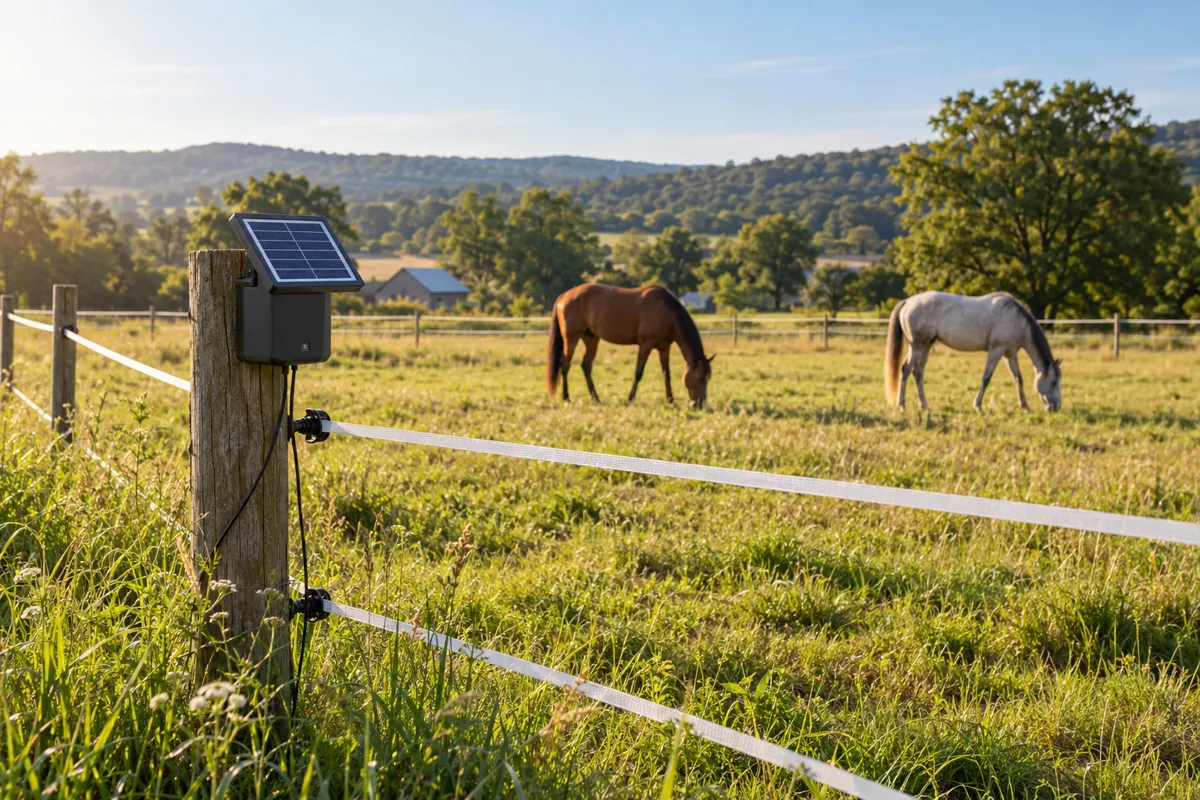
Maintained paddock
Zareba ESP10M-Z
Look closely at its separate conductor and weed-condition ratings.
Check Current Price & Availability at Amazon ↗For the Farm / Solar fence chargers
Three solar energizers, three different starting points. Look beyond advertised miles to conductor type, vegetation, usable output and the animals behind the fence.
Explore the three models ↓As an Amazon Associate I earn from qualifying purchases.
A better starting point
Solar fencing is appealing where an outlet is inconvenient: a paddock, a movable grazing division or a remote pasture. But a sunny location does not tell you how much fence an energizer can support. The conductor, vegetation contact, soil and animal requirements all belong in the decision.
Our shortlist offers three configurations to investigate. It is not a hands-on reliability ranking, and the three products are not interchangeable solutions for every livestock species or fence design.
Research reviewed October 31, 2026. Manufacturer specifications are linked below; check current manuals and the exact seller package.
Choose your starting point
Maintained paddock
Look closely at its separate conductor and weed-condition ratings.
Check Current Price & Availability at Amazon ↗Movable grazing divisions
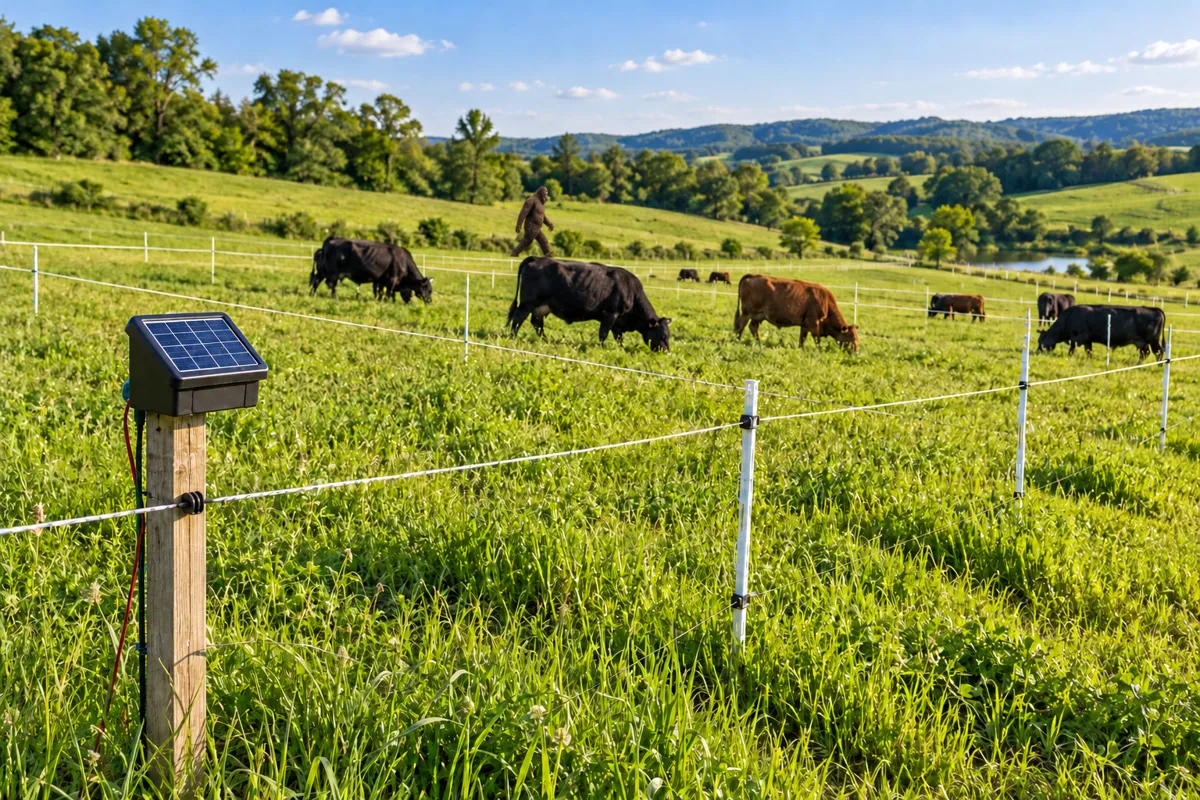
Integrated lithium power with a portable setup for changing pasture divisions.
Check Current Price & Availability at Amazon ↗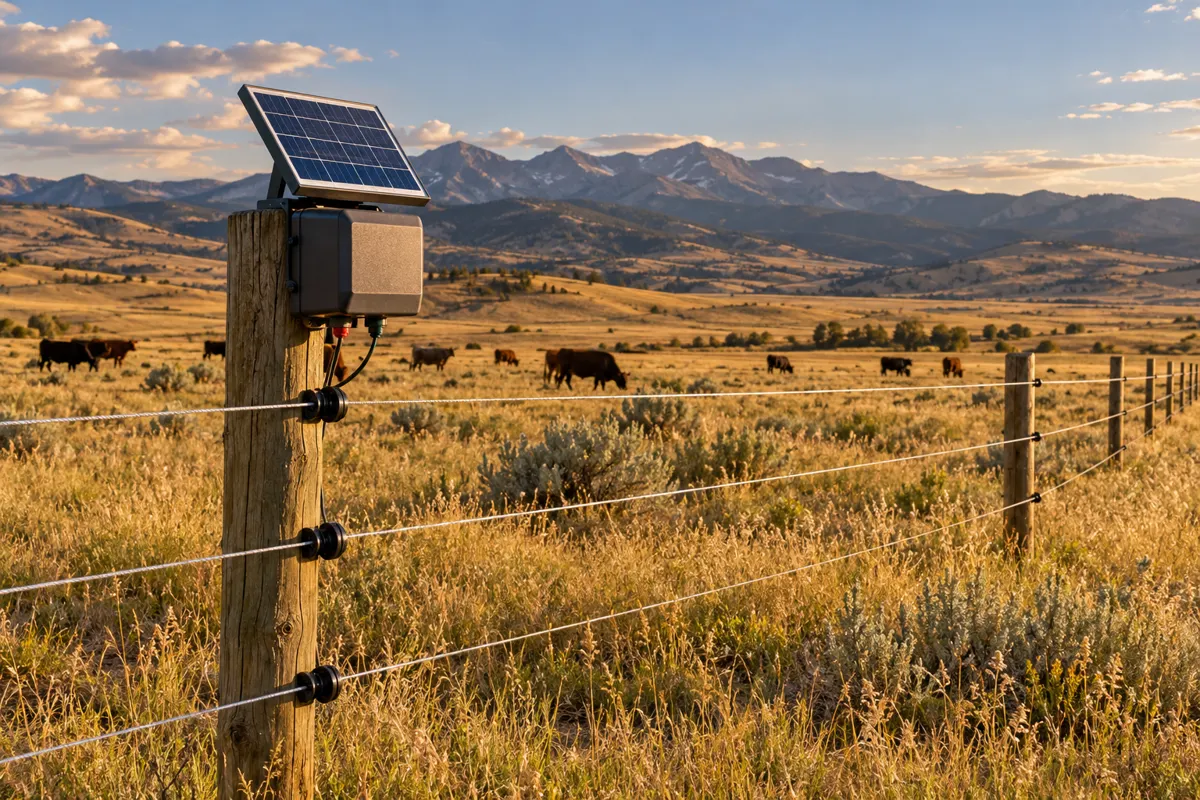
Larger pasture planning
Investigate its 12V battery system and published loaded-voltage figures.
Check Current Price & Availability at Amazon ↗Images illustrate use situations and generic equipment; they are not product photographs or installation diagrams.
Make a fair comparison
| Published specification | Zareba ESP10M-Z | Gallagher S30 | Parmak Magnum 12 |
|---|---|---|---|
| Output energy | 0.15J | 0.21J | Not explicitly labeled as output on reviewed page |
| Stored energy | 0.33J | 0.3J | Not explicitly labeled as stored on reviewed page |
| Other energy figure | — | — | Published low/high range: 1.1–3.1+J |
| Distance context | Steel: 10 miles clean / 5 light weeds; polywire: 5 / 2.5 miles | 4 miles typical recommendation / 20 miles clean wire | Up to 30 miles advertised; confirm actual load |
| Included battery | 6V rechargeable | Lithium iron phosphate | 12V sealed rechargeable |
| Question to resolve first | Which conductor and vegetation row describes your fence? | Does the intended fence load fit the typical-use guidance? | What energy definition and loaded performance apply to your system? |
We do not normalize an unlabeled joule figure into output energy. Distance figures also use different conditions, so “30 miles” versus “20 miles” is not a measured performance contest.
Before checkout
Follow the current model manual for installation and safety. Turn the energizer off before working on the fence. Use an appropriate high-voltage fence tester; do not check a fence by touching it. Never connect two energizers to the same fence circuit.
Arizona & other dry climates
Dry, sandy or rocky soil can make the return path difficult. Discuss an appropriate grounding arrangement with the manufacturer rather than assuming that strong sunlight guarantees a strong fence. Keep the fence ground system separate from utility grounding and follow the model’s required clearances.
Grounding guidance from Zareba ↗Build a useful shopping list
A fence tester, correct insulators and properly specified grounding components can be more useful than buying a larger energizer without diagnosing the fence. Record the parts recommended for your model and conductor before adding accessories.
For temporary fencing, consider how reels, posts and safe entry points move with the paddock. For a permanent pasture, plan connections, vegetation access and future repairs. For netting, obtain an explicit recommendation for the net type and roll count.
Useful answers
Do not assume that. Conductor type, energized strands, vegetation and grounding change the load. Ask the manufacturer to assess the entire fence design and the conditions behind its distance rating.
Animal type alone is not enough. Coat or feather coverage, training, fence spacing, netting design and vegetation matter. Send the manufacturer your proposed layout and ask for a species-appropriate system recommendation.
Use only charging and battery configurations supported by the exact energizer manual. A panel or battery that works with a portable power station is not automatically compatible with a fence charger.
No. Inspect conductors and insulators, manage vegetation, keep the panel clear, and follow battery care instructions. Test the fence after installation and at the intervals and locations the manufacturer recommends.